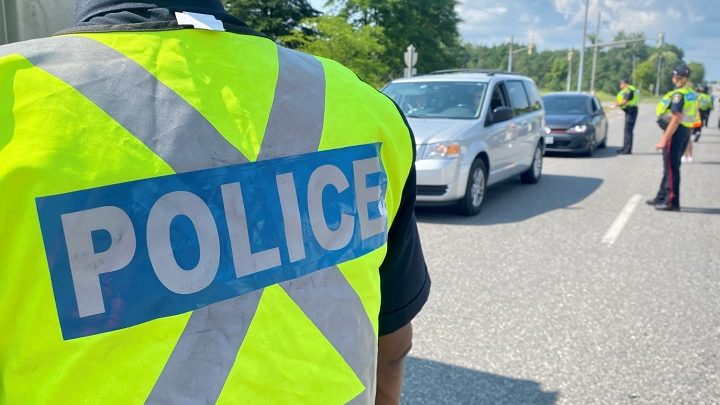
Ontario introduces harsher penalties for impaired drivers, including lifetime license suspensions for fatal offenses, with London seeing 269 charges in December

Tougher Penalties for Impaired Driving in Ontario
Drivers in Ontario caught operating a vehicle while impaired will now face stricter penalties that do not require a judge’s determination.
The province updated the Highway Traffic Act effective January 1. This includes a lifetime licence suspension for impaired driving that causes death. First-time offenders will lose their licence for seven days, an increase from the previous three-day suspension.
Statements from Officials
“There’s no one single solution to the problem of impaired driving,” said Steve Sullivan, CEO of Mothers Against Drunk Driving (MADD) Canada. “So I think any time we see some reforms that are positive, that’s a step in the right direction.”
Previously, driving bans in criminal cases were decided by a judge. Sullivan noted that an automatic ban in certain cases is a tougher and more consistent approach.
Impaired Driving Charges
On Monday, the Ontario Provincial Police (OPP) released data from the holiday RIDE Program. It showed that 1,268 people were charged with impaired driving in December.
In the London area, there were 269 charges and 40 warn-range suspensions.
“A lot of people continue to drink and drive, which is frankly baffling when you consider that people can make alternative arrangements to get home safely and some people choose not to do so,” said OPP spokesperson Derek Rogers.
He added that police support any new legislation that will improve public safety.
Mandatory Education and Future Changes
One change includes mandatory education for people convicted of impaired driving. This will now occur after the first offence instead of the second.
“At MADD, we think that people who drive impaired can benefit from education about how alcohol can impact your system and your ability to drive,” Sullivan said.
Sullivan also expressed a desire for Ontario to implement Immediate Roadside Prohibition (IRP), similar to other provinces.
Immediate Roadside Prohibition
IRP allows police officers to issue administrative penalties directly to drivers with a blood alcohol content (BAC) over 0.08, which is the threshold for a criminal offence. British Columbia was the first province to adopt this in 2010, followed by Manitoba, Saskatchewan, and Alberta.
Roadside penalties include immediate licence suspension, impoundment, fines, ignition interlock devices, and education programs. Sullivan noted that this also saves time for police who spend hours processing paperwork for offences.
Ignition Interlock Devices
Sullivan advocates for ignition interlock devices. These devices measure a driver’s BAC before allowing the vehicle to start, ensuring that anyone convicted of impaired driving is on the road legally, sober, and insured.
“The fact that hundreds of people were charged with impaired driving at a time when the public knew the police were out there looking for impaired drivers is clearly disturbing,” he said, referring to the latest RIDE program numbers.
Summary of Changes to the Highway Traffic Act
| Change | Description |
|---|---|
| Lifetime Licence Suspension | For impaired driving causing death |
| Mandatory Education | For first-time alcohol/drug-related occurrences |
| Roadside Licence Suspensions | 7 days for first offence, 14 days for second, 30 days for further offences |