A Vancouver trial begins over whether RCMP violated press freedoms by arresting journalist Amber Bracken during a 2021 pipeline protest in northern BC

Amber Bracken’s Lawsuit Against RCMP Begins in B.C. Supreme Court
The lawyer for award-winning photojournalist Amber Bracken stated that the RCMP wrongly labeled her as an “occupier” instead of recognizing her as a journalist during her arrest at a pipeline protest in northern British Columbia.
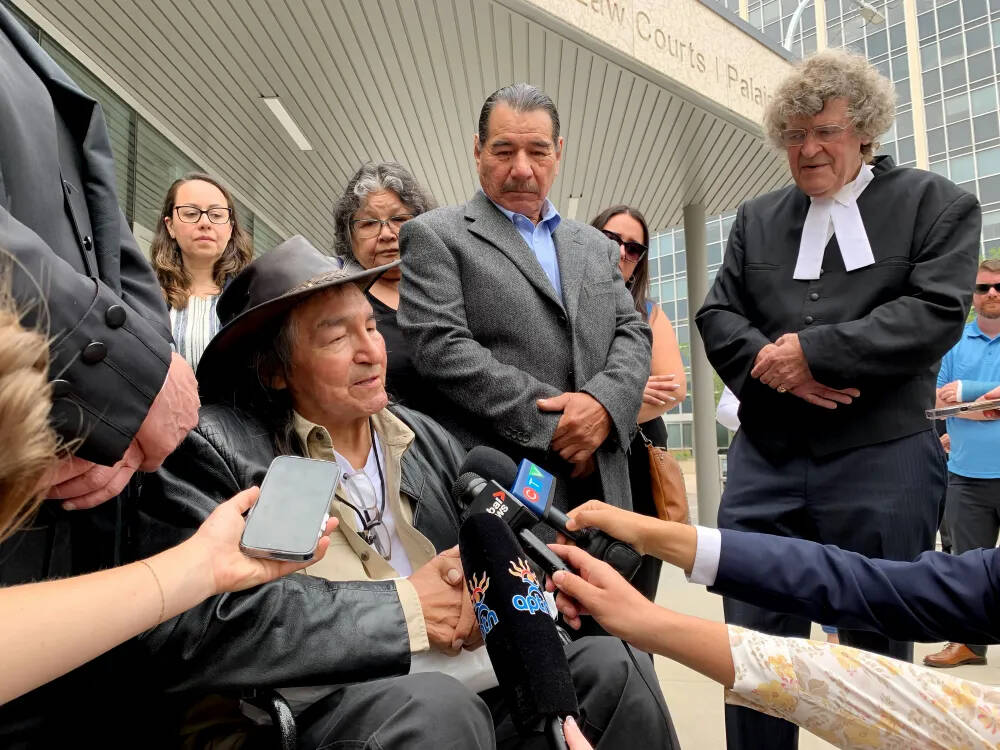
Sean Hern made these remarks during the opening arguments on the first day of the five-week trial in B.C. Supreme Court, which began on Monday in Vancouver.
“Her job is to observe the occupation and document it for the public,” Hern said. He added that the defense’s evidence for claiming she was not acting as a journalist was solely based on her presence in the tiny house.
Details of the Arrest
| Date of Arrest | Duration in Custody | Location | Charges Filed |
|---|---|---|---|
| Nov. 19, 2021 | 4 days | Pipeline protest site, northern B.C. | Wrongful arrest, wrongful detention, breach of Charter rights |
Bracken was arrested on November 19, 2021, and held for four days after police raided the small structure built in defiance of a court-ordered injunction obtained by Coastal GasLink.
Bracken and the news outlet The Narwhal, for which she was working at the time, are suing the RCMP for wrongful arrest, wrongful detention, and breach of Charter rights, including the right of journalists to gather and report information.
Five Indigenous land defenders and a documentary filmmaker were also arrested in the tiny house during the raid.
Evidence Presented in Court
Hern noted that both senior management at The Narwhal and the president of the Canadian Association of Journalists (CAJ) had informed RCMP leaders about Bracken’s presence in the injunction area prior to the raid.
He presented a photo of Bracken’s arrest as she exited the tiny house, highlighting her two professional cameras, a large bag, and press tags as clear evidence of her media status. Hern mentioned that she had a letter of assignment from The Narwhal and CAJ identification during her police processing.
Hern argued that if there was any doubt about Bracken’s identity, RCMP commanders monitoring the raid could have easily searched her name online to verify her credentials.
Defense’s Argument
The defense counsel for the Attorney General of Canada, representing the RCMP, countered that the Charter does not grant media members the right to ignore court orders or the law.
“Ms. Bracken’s detention followed a lawful arrest and was not arbitrary. Her work as a journalist does not exempt her from complying with the court order,” said Craig Cameron. “RCMP are under no obligation to give her preferential treatment.”
Bracken’s Statement
Before the trial, Bracken expressed her satisfaction that the question of her rights as a journalist would be addressed in court.
“I think this is a case about the media as a whole, the press, standing together,” she stated.
Coastal GasLink initially filed a charge of civil contempt against Bracken upon her arrest but dropped the charge a month later.
Outside the courtroom, The Narwhal co-founder and editor-in-chief, Carol Linnitt, emphasized that the case is about whether journalists have the right to document police actions for public benefit.
“When Amber was arrested, she was covering a conflict in a remote location, where the nature of pipeline permits, injunction orders, and Indigenous rights are fraught and contested,” Linnitt said. “The arrests she documented occurred amid helicopters, axes, chainsaws, advancing snipers, and canine units.”
Bracken is expected to testify on Tuesday.