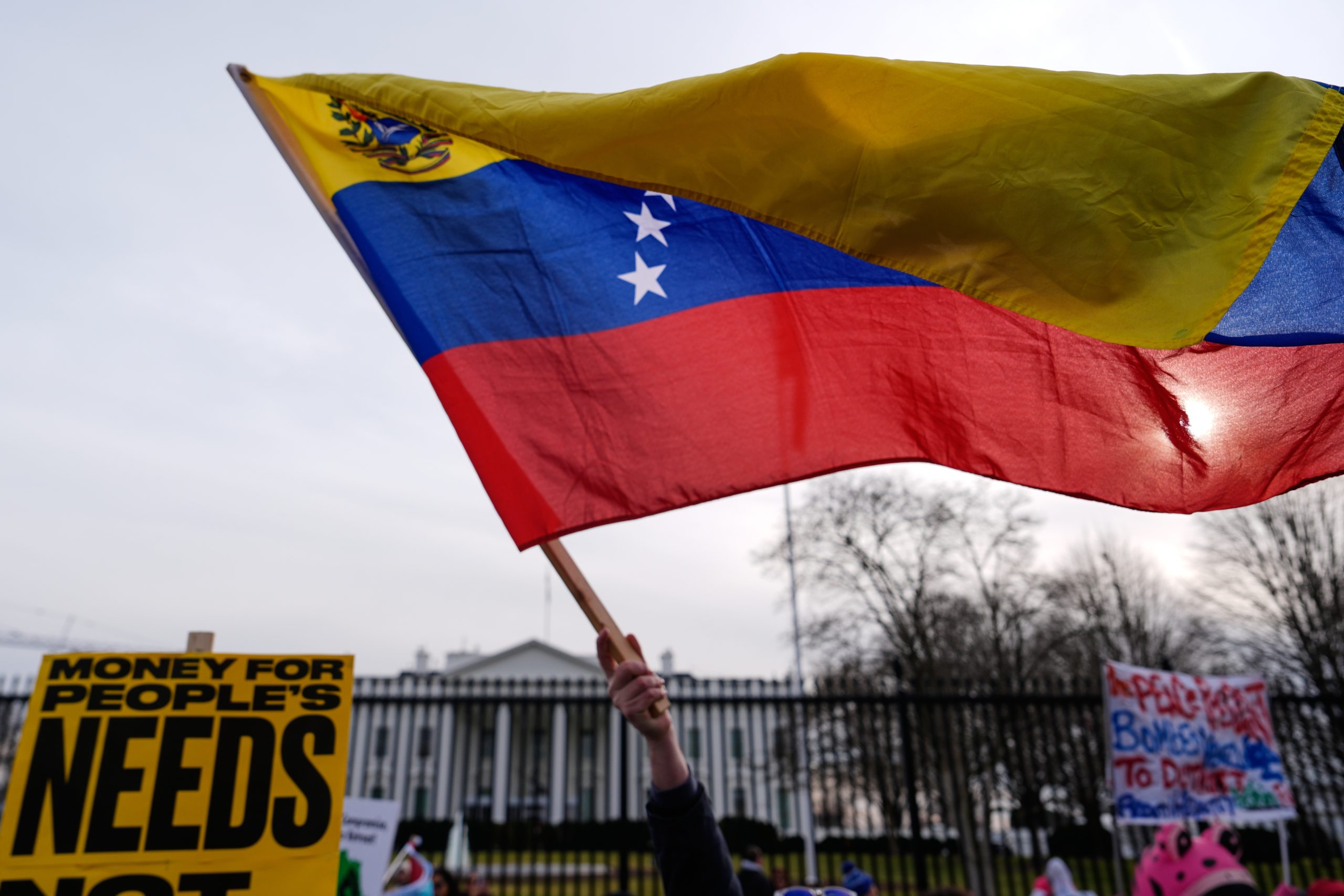
In Vancouver, British Columbians react with optimism and anger after the U.S. captures Venezuelan President Nicolás Maduro during a military strike.

British Columbians with ties to Venezuela are reacting with a mix of cautious optimism and anger after U.S. President Donald Trump announced the capture of Venezuelan President Nicolás Maduro following what he described as a “large-scale strike” early Saturday.
Some Venezuelan Canadians in B.C. say the moment could mark the start of long-awaited political change.
“We received the news at around midnight and since then we have been trying to steer away from rumours and unconfirmed details, but it was a surprise,” said Meriely Arias, a board member with the Venezuelan Canadian Society of B.C.
“We’re happy that Maduro will face justice. That is definitely the most positive takeaway,” she said. She said there is hope that the country may have a chance to rebuild its economy.
Arias said friends and family back in Venezuela are cautiously optimistic but are worried about what comes next. “The overall feeling is to wait and see.”
Others took to the streets of downtown Vancouver to protest U.S. military action. Dozens of protesters gathered outside the Vancouver Art Gallery Saturday afternoon, including members of Venezuela Peace & Solidarity of Vancouver.
“We condemn the actions as clearly imperialist, capitalist actions,” said Jordan Lee, one of the protesters. “It’s the right of the people of Venezuela to decide who leads them and how their resources are used.”
Tensions between Venezuela and the United States escalated throughout 2025. The U.S. military launched a number of boat strikes in the Caribbean Sea and in the eastern Pacific Ocean since early September, killing at least 115 people, according to numbers announced by the Trump administration.
Trump has justified the attacks as a necessary escalation to stem the flow of drugs into the United States. Along with the strikes, the Trump administration has built up military forces in the region as part of a pressure campaign on Maduro, who has been charged with narco-terrorism in the U.S.
“They’ve been intimidating the entire country … and this is just sort of the next evolution of that,” said another demonstrator, Tony Graydon. “Everyone knows it’s about the oil.”
During a Saturday news conference, Trump said he’ll get Venezuelan oil flowing and will sell it to several countries. That could pose a long-term threat to Canada’s oil industry, according to Adam Pankratz, a lecturer at the University of British Columbia’s Sauder School of Business.
Venezuela has the world’s largest oil reserves but Pankratz says lack of investment and mismanagement means production has declined. Roxanna Vigil, an international affairs fellow at the Council on Foreign Relations, says she has concerns about what comes next in Venezuela after the U.S. captured President Nicolás Maduro and his wife, Cilia Flores, early Saturday.
Vigil says it will take years to reverse the long decline of Venezuela’s oil sector and that it’s not clear how the Trump administration intends to move forward. “The infrastructure there has been neglected by the Maduro regime and as a result can’t come online immediately,” Pankratz said.
The bitumen in Venezuela’s Orinoco Belt is “chemically similar” to the bitumen in Alberta, he said. “The possibility of Venezuelan crude coming into the United States on a sustained and regular basis is a threat to Canada’s most productive industry.”
Canada is said to be the world’s fourth largest crude oil exporter, but the majority of its exports go to refiners in the United States. The strong similarities between Venezuelan and Canadian crude, as well as the ease with which tankers could move crude between Venezuelan ports and refineries in the U.S. Gulf Coast, suggest that if Venezuelan crude production ever comes back, it would likely be able to undercut Canadian crude at Gulf refineries, Pankratz says.
“We need to seriously think about diversifying … so we can get our oil to markets other than the United States,” Pankratz said. This comes as Ottawa and Alberta push ahead with conversations about expanding export capacity to the Pacific.
Prime Minister Mark Carney and Alberta Premier Danielle Smith signed a memorandum of understanding (MOU) in November that lays out the steps for a potential pipeline to carry oil from Alberta to the Pacific coast.
For years, oil tanker traffic has been prohibited off the waters of northern British Columbia in order to protect environmentally sensitive coastlines from disaster. But the federal government is now open to the idea of changing its moratorium.
B.C. is also backing efforts to expand capacity along the existing Trans Mountain corridor, which could eventually increase throughput by hundreds of thousands of barrels per day. However, Pankratz says pipelines don’t get built overnight.
“If we look down the road, how long is it going to take to build a pipeline in Canada? Well, the track record isn’t good,” he said, pointing to the Trans Mountain expansion project, which took 12 years to develop and build.
| Date | Event | Location | People Involved |
|---|---|---|---|
| Saturday | U.S. captures Nicolás Maduro | Vancouver | Donald Trump, Nicolás Maduro, Cilia Flores |
| November | MOU signed for pipeline | Alberta to Pacific | Mark Carney, Danielle Smith |