Calgary faces recurring water restrictions after a major pipe failure, prompting nearby cities like Medicine Hat and Lethbridge to accelerate infrastructure upgrades to avoid similar issues.

Utility Upgrades Planned in Southern Alberta Cities
Utility officials in southern Alberta’s mid-sized cities are planning system upgrades. These upgrades aim to prevent major water line breaks like the one that forced Calgary to implement water-use restrictions for the second time in two years.
Medicine Hat and Lethbridge Projects
Medicine Hat and Lethbridge both plan to twin critical portions of their water delivery systems. These projects were identified several years ago and are ready to be built in the coming construction seasons.
A report released on Wednesday about the 2024 break of the Bearspaw feeder main in Calgary suggested that better planning could have avoided the major disruption. It also noted the need for spending on building redundancy into the water system.
Neither of the smaller cities waited for the Calgary failure to start preventing similar problems. Medicine Hat began looking at potential weak points in its system five years ago. It formally submitted specific upgrades into a city capital priorities list just as the first Bearspaw break occurred two years ago.
Medicine Hat’s Infrastructure Plans
“We went through a ranking process as to which were most critical and that’s how we came up with the Kipling Corridor,” said Pat Bohan, managing director of Medicine Hat’s infrastructure division. “It’s a pivotal point in our water infrastructure. We looked at how we might best serve in case of a catastrophic failure.”
Medicine Hat city councillor Brian Varga stated, “We’ve been fixing the non-sexy stuff that’s underneath the ground to make sure that everything is running right.”
The southeast Alberta city, with a population of 65,000, will spend $6.3 million this year to twin the Kipling Street feeder main. This central length of pipe services about one-third of residents in the south end.
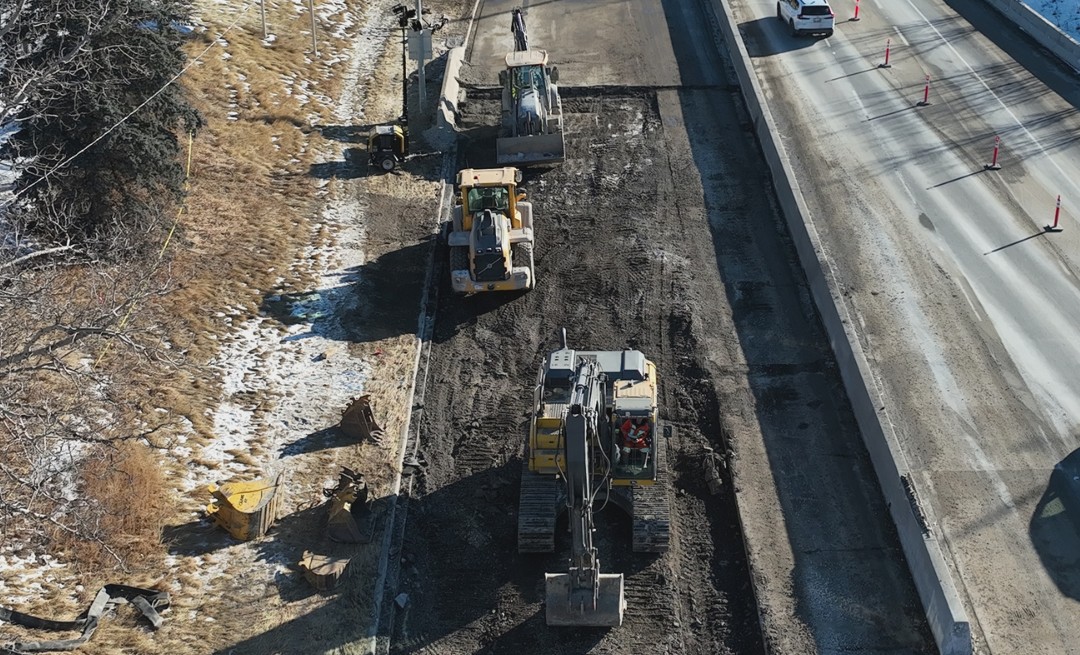
A new line will be laid beside an existing line from 1972. The older pipe will have new inspection ports installed, allowing both to be used together. This redundancy will help isolate and repair any breakage without service disruption, according to Bohan.
Lethbridge’s Long-Term Plans
In Lethbridge, a similar project to twin a reservoir supply line was included in the long-term projects plan in 2022. Final approval is expected this fall, with construction likely starting in 2027.
Lethbridge Mayor Blaine Hyggen will request an update on the project this month due to the new emergency in Calgary, as reported by his staff to CBC News.
Calgary’s Water Restrictions
Calgarians are facing water-use restrictions again after the Bearspaw feeder main failed last week for the second time in two years. Repairs are underway this week, and residents are asked to reduce water consumption.
Mayor Jeromy Farkas stated that restrictions may return at times through 2028 as a new parallel line is installed along a busy stretch of 16th Avenue. Farkas described the project as “the most ambitious construction project in our city’s entire history… We’re replacing the engine of the aircraft in mid-flight.”
Infrastructure Challenges in Alberta
Mayor Jeromy Farkas noted that Calgarians should expect recurring water restrictions until the main Bearspaw feeder main is repaired, which is expected to take years.
In Lethbridge, the Uplands and Garry Drive reservoirs are currently supplied by one single line. This line carries about one-third of the water treated by the city and serves large industrial users in the north and homes in west Lethbridge.
Alongside the Kipling project, Medicine Hat’s utility division has ranked four other priority projects. These projects involve pipes dating from 1959 to 1984 and are queued for replacement or twinning in the coming years, as discussed during the 2024 budget meeting.
This highlights part of the “infrastructure gap” cities face in upgrading public works installed during a high-growth period in the mid-20th century.
“We’ve been fixing the non-sexy stuff that’s underneath the ground to make sure that everything is running right,” said Medicine Hat councillor Brian Varga. “We still have pipes that are a hundred years old that we’ll have to fix, I’m sure… everything takes time and you can only do so much each year.”
The Kipling Street Booster station supplies drinking water for one-third of Medicine Hat residents. A 50-year-old line to the station will be twinned in 2026.
A block-by-block overhaul of hundred-year-old underground infrastructure in downtown Medicine Hat began in 2012. Crews removed old cast iron and clay sewer pipes, and in some cases, wooden water pipes.
A conduit of boards held together with pitch and wire was recovered during construction in the 2020s and is now displayed as an artifact at the city’s utility offices.
This discovery led to a major examination of other infrastructure replacement needs for Medicine Hat. The final report outlined projects totaling $900 million to be spread over 30 years. These projects aim to replace or upgrade pipes, roads, and bridges nearing the end of their useful lifespan.
Currently, about $30 million is spent annually to replace 60- to 80-year-old water lines, storm sewers, and sanitary sewers, either alongside road work or based on need.
Summary of Key Projects
| City | Project | Cost | Timeline |
|---|---|---|---|
| Medicine Hat | Kipling Street Feeder Main | $6.3 million | 2023 |
| Lethbridge | Reservoir Supply Line | Not specified | 2027 |
| Medicine Hat | Booster Station Line | Not specified | 2026 |